46 Waterview St, Balmain NSW 2041
Every home has a story — whether it spans generations or is only just beginning.
About Waterview Street
Historical/alternate name evidence: George Street. The first extracted Sands reference is 1861.
- 1840 — Called George Street in 1840s for George Cooper.
- 49 Waterview Street, c1855, built by Captain William Sawyer, later called Regimbah .
- George Street
Some historical information was obtained using Streets, Lanes, and Places 1836–2017 by Yvonne Davidson and Kathleen Hamey, The Balmain Association Inc. (2017).
The story of this home
Balmoral House and its beginnings
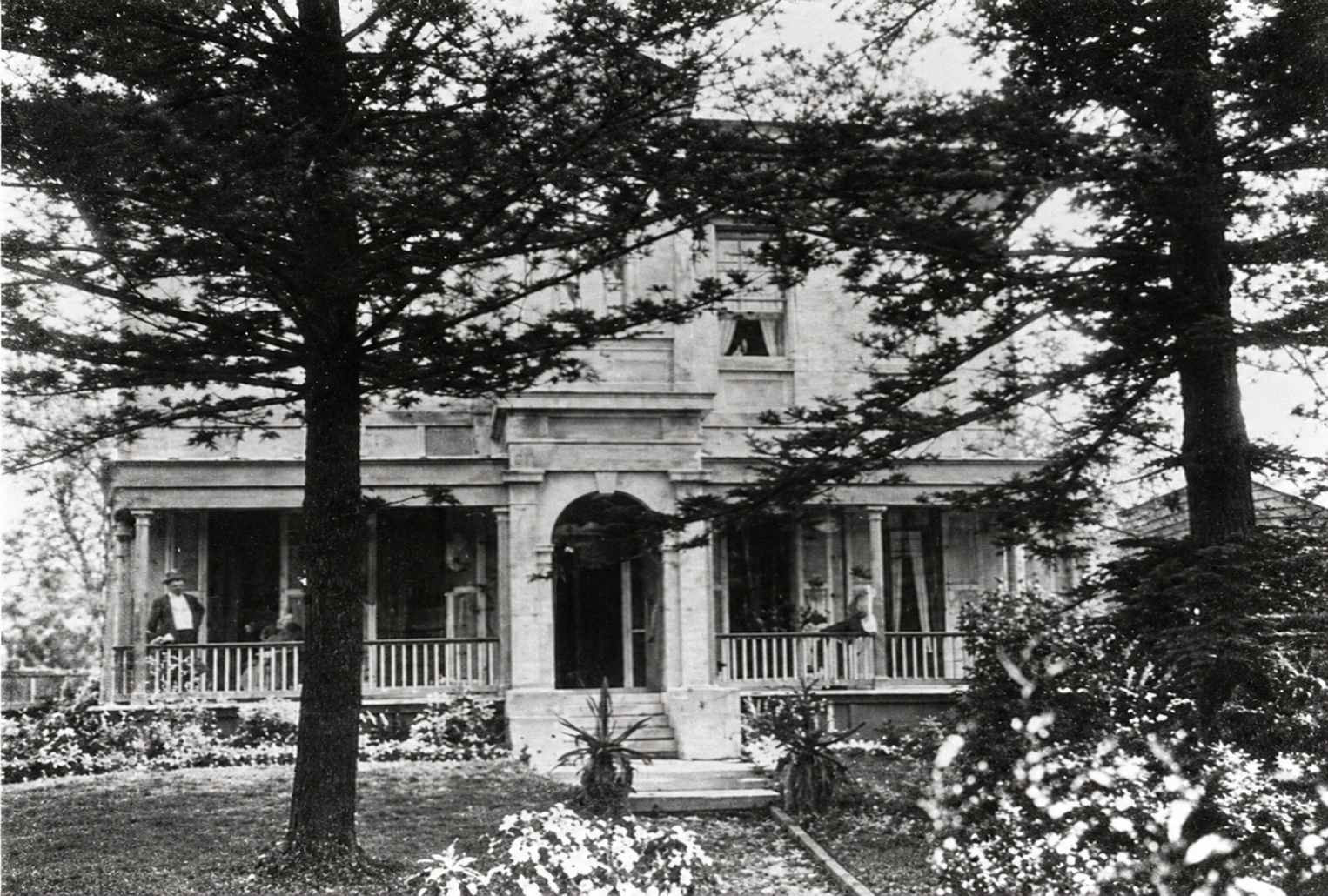
Balmoral House at 46 Waterview Street is a surviving two-storey stone villa whose history began with an earlier cottage and an unfinished building project. In April 1842, storekeeper Frederick Morris bought lot 29 of the Waterview Estate for £33. By 1844 it held a weatherboard cottage and garden. Morris and his wife Rebecca sold the property that February to William Annett Falconer Townend, who began a more ambitious house of dressed stone. Townend’s financial difficulties brought the property to auction in August 1847, with the stone house still unfinished. [1]
Merchants Henry Ferris and George Wilkie acquired the unfinished property and advertised it for sale in May 1848. William Henry Sawyer subsequently bought it, selling to Dr Frederick Harpur in August 1851. Reynolds considers that Townend’s unfinished stone structure became the later Balmoral House; this should not be confused with the earlier weatherboard cottage. Harpur’s December 1851 mortgage described the house as under construction. By July 1853, he reported it completed. [1]
Harpur assembled a substantial holding: adjoining Waterview Street lots gave him a frontage of 198 feet, while land extending towards Campbell Street provided stables, outbuildings and easier access across the steep terrain. He lived in the completed house until selling it to master mariner Thomas Coutts in January 1859 for £2,500. [1]
The Coutts years and later tenants
Coutts and his family occupied the house from about 1860, and he enlarged the holding in 1863. A particularly personal trace of their occupation was an inscription made in a porch window by Thomas Coutts junior, dated 16 January 1865. Reynolds records that it remained visible in the early 1980s. The family connection also carries a difficult history: the journal discusses the 1848 allegations that Coutts distributed poisoned flour to Aboriginal people at Kangaroo Creek, before his ownership of this house. He was discharged for lack of evidence. That episode belongs in an account of his life and should not be presented as an event at Balmoral House. [2]
Coutts returned to Queensland in 1865 and died in 1868. His trustees subsequently let the house. By 1869, tenant Mrs Grey called it Belmont House. Later occupants included Helen (Ellen) Chilcott and Henry Chilcott, and the journal identifies AMP actuary Morris Alexander Black as a short-term tenant. In February 1875 the trustees sold the property to shipchandler John Paul for £1,560. Paul and his business partner Cornelius Potts lived there with the Chilcotts, who may have operated a private school at the house until 1876. The school use remains qualified in the source. [3]
The Beattie family and the changing estate
In October 1876 Paul sold the house to shipbuilder Henry Henderson Beattie for £2,200. Beattie had worked at Pyrmont and opened a shipyard below Weston Street, Balmain East, in 1874. His career connects the house with the peninsula’s maritime industries. Reynolds suggests that Beattie may have the strongest claim to naming the dwelling Balmoral House, so the origin of that name should not be attributed conclusively to the Coutts family. [3]
Janet Millar Beattie oversaw a household with dining, drawing, breakfast and work rooms, five bedrooms, a bathroom, kitchen, washhouse and servants’ room. She died in 1904; Henry remained at the house until his death in June 1911. The journal’s directory evidence continues the family’s association through John Beattie in 1911–1914, Jessie Beattie in 1915–1928 and John again in 1929–1932. [4]
After Henry’s death, the trustees subdivided and sold land to repay debts. The 1915 subdivision created 16 lots, with Balmoral House retained on lot 16. Smaller houses developed on former estate land along Waterview Street, changing the setting of the original villa. [4]
Alteration, restoration and surviving architecture
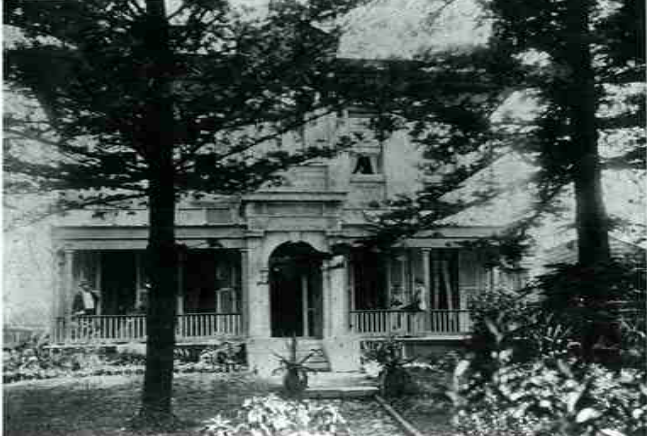
In October 1949 the house was sold to Balmain builder William Gorman, who added a weatherboard upper storey above the verandah. Gorman sold in June 1987, and the new owners removed that addition and restored the house. The journal does not give a precise completion date for this restoration. Its illustrations include an early sketch and an undated photograph, both credited to the Balmain Association. [4]
The Balmain Association’s walking guide describes the house as Victorian Georgian: a balanced stone facade, central entrance, five upper windows and a hipped roof with end chimneys. Decorative stone lintels and panels enrich an otherwise restrained design. The guide gives an approximate construction date of 1855 and mentions a balcony alteration in 1969; this account follows the journal’s documentary evidence of completion by July 1853. The balcony note should be checked against the separate verandah addition before combining their dates. [5]
Historical research: Peter Reynolds, “The Waterview Estate, Balmain – Part 3: From Cooper Street to Waterview Street 1835–1970”, Leichhardt Historical Journal No. 24 (2014). [1] pp. 35–36 (PDF pp. 37–38); [2] pp. 37–38 (PDF pp. 39–40); [3] p. 38 (PDF p. 40); [4] p. 39 (PDF p. 41). Historical illustrations: pp. 35 and 37, credited to the Balmain Association.
[5] Balmain Association, Humble to Handsome: Balmain Architecture 1840–1860s, Stop 18, p. 6. Research gaps remain after the 1987 sale; this is a sourced account, not a complete ownership register.
Historic people
People whose lives form part of this house’s story.
Cornelius Potts
Cornelius Potts was John Paul’s partner in the Erskine Street shipchandlers Potts & Paul. Both lived at No. 46 and shared the house with the Chilcotts.
View full profile →Dr Frederick Harpur
Frederick Harpur was a Sydney surgeon and is described elsewhere in the journal series as the first medical man to practise in Balmain. He bought the future Balmoral House site from William Henry Sawyer in 1851, assembled lots 27 to 29 and adjoining Campbell Street land, and mortgaged the future house in December 1851 while it was still in the course of erection. In July 1853 he stated that the house was finished and completed. Harpur lived th…
View full profile →Frederick Morris
Balmain storekeeper Frederick Morris bought lot 29 in April 1842. A weatherboard cottage and garden stood there in 1844. Frederick and Rebecca Morris sold the cottage site to Townend in February 1844.
View full profile →See 23 more historic peopleShow fewer historic people
George Clark
George Clark, a grazier at East Taralga, Warwick, Queensland, served with Rev James Coutts as a trustee of Thomas Coutts’s real estate. The trustees let and later sold Balmoral House.
View full profile →George Wilkie
Sydney innkeeper George Wilkie jointly purchased the unfinished house with merchant Henry Ferris at the August 1847 auction. They advertised it in May 1848.
View full profile →Helen (Ellen) Chilcott
The journal lists Mrs Helen or Ellen Chilcott in 1872 and Henry and Helen Chilcott from 1874. They shared the house with John Paul and Cornelius Potts and may have operated a private school there until 1876. The school use remains qualified.
View full profile →Henry Chilcott
Henry and Helen Chilcott are listed from 1874. They shared the house with Paul and Potts and may have operated a private school until 1876. The source does not establish the school operation as certain.
View full profile →Henry Ferris
Sydney merchant Henry Ferris and innkeeper George Wilkie were the highest bidders at the August 1847 auction. Their purchase included an unfinished cut-stone house. They advertised the property in May 1848.
View full profile →Henry Henderson Beattie
Henry Henderson Beattie was born at Seamills, Burntisland, Fife, Scotland, on 19 April 1828, the son of blacksmith James Beattie and Margaret Dewar. He married Janet Millar in 1850 and the journal records that he is said to have arrived in Sydney in 1854. Beattie worked as a shipwright and shipbuilder, laid down a slipway for the Australian Steam Navigation Company at Darling Island, Pyrmont, and built vessels including the Leichhardt and Tino…
View full profile →Janet Millar Beattie
Janet Millar Beattie, wife of Henry, supervised the care of Balmoral’s rooms and household. She died on 26 June 1904, aged 74. The journal records her role in the life of the house.
View full profile →Jessie Beattie
Jessie Beattie is listed at Balmoral House in 1915–1928 following Henry Beattie’s death and the reorganisation of the estate.
View full profile →John Beattie
Shipwright John Beattie is listed at Balmoral in 1911–1914 and again in 1929–1932. The journal’s intervening listings name Jessie Beattie.
View full profile →John Paul
John Paul purchased the house from the Coutts trustees in February 1875. He and business partner Cornelius Potts lived there, sharing with the Chilcotts. Paul sold to Henry Beattie in October 1876.
View full profile →Morris Alexander Black
Morris Alexander Black (1830–1890), actuary of the AMP Society, lived at Balmoral House for a few months. The journal describes his actuarial career, reviews of AMP’s accounts and later public work, but does not date this tenancy precisely.
View full profile →Mrs Grey
Mrs Grey rented the house in 1869 after the Coutts family had left and called it Belmont House. Her given name is not supplied.
View full profile →Rebecca Morris
Rebecca Morris joined her husband Frederick in the February 1844 sale of the cottage site to William Annett Falconer Townend. The source establishes her part in the transaction, not residence in the later stone house.
View full profile →Rev James Coutts
Newcastle Presbyterian minister James Coutts, brother of Thomas, was a trustee of Thomas Coutts’s real estate with George Clark. The trustees let and later sold Balmoral House. Residence is not established.
View full profile →Susan Leggatt
Sydney publican Susan Leggatt received lots 27–28 from her son William in February 1849 and sold them to Frederick Harpur in July 1853. This connection concerns the assembled estate, not established residence.
View full profile →Thomas Coutts
Thomas Coutts bought Balmoral House in January 1859 and his family occupied it from about 1860. Earlier, at Kangaroo Creek on the Clarence River, he was accused of supplying poisoned flour to Aboriginal people. Reynolds’s detailed afterword describes Commissioner Oliver Fry’s investigation into deaths reported to have occurred around 28 November 1847, Coutts’s arrest, committal for trial on 17 January 1848, and release on bail later that month…
View full profile →Thomas Coutts junior
The journal records an inscription scratched into a porch window reading Thomas Coutts Jnr with the date 16 January 1865. It remained visible in the early 1980s. This profile distinguishes the son from his father.
View full profile →Thomas Leggatt
Thomas Leggatt bought lots 27–28 in February 1842. These lots were later incorporated into Harpur’s Balmoral holding. Leggatt died on 30 April 1846; he is not presented as an occupant of the later completed house.
View full profile →Underwood (given name not recorded)
The journal records a tenant named only as Underwood in Townend’s cottage in 1844. This cottage preceded the completed stone house.
View full profile →William Annett Falconer Townend
William Annett Falconer Townend married Elizabeth Price in 1842. Their children recorded in the journal were William H, Harry H, Anny E and Constance E. In 1844 he held a position in the Commercial Bank. After buying the cottage site on lot 29 from Frederick and Rebecca Morris, he began a grand cut-stone house. Financial difficulties following the 1842 depression led to sequestration of his estate and a public auction in 1847. The unfinished s…
View full profile →William Gorman
Balmain builder William Gorman bought Balmoral House in October 1949 and added a weatherboard upper storey to the verandah. He sold in June 1987 to new owners who removed the addition and restored the house.
View full profile →William Henry Sawyer
William Henry Sawyer bought the property after Ferris and Wilkie and sold it to Dr Frederick Harpur in August 1851. This is his connection to the Balmoral site, distinct from his later house at 49 Waterview Street.
View full profile →William Lube Leggatt
William Lube Leggatt inherited lots 27–28 from his father Thomas and conveyed them to his mother Susan in February 1849. The lots later formed part of Harpur’s Balmoral holding.
View full profile →Existing people — add information or manage entries
People associated with this house
Residents, owners, builders and others whose connection forms part of this house’s history.
Cornelius Potts — Resident; shipchandler · About 1875–1876
About 1875–1876
Cornelius Potts was John Paul’s partner in the Erskine Street shipchandlers Potts & Paul. Both lived at No. 46 and shared the house with the Chilcotts.
Sources:
Peter Reynolds, Leichhardt Historical Journal No. 24 (2014), From Cooper Street to Waterview Street: Waterview Estate 1835–1970: Part 3, printed pp. 35–39.
Dr Frederick Harpur — COMPLETED OR OWNED · 1851-1859
1851-1859
Frederick Harpur was a Sydney surgeon and is described elsewhere in the journal series as the first medical man to practise in Balmain. He bought the future Balmoral House site from William Henry Sawyer in 1851, assembled lots 27 to 29 and adjoining Campbell Street land, and mortgaged the future house in December 1851 while it was still in the course of erection. In July 1853 he stated that the house was finished and completed. Harpur lived there until January 1859, when he sold it to Thomas Coutts. The journals also place him in other Balmain land dealings, including the purchase of Young's lots Q-S in 1862.
Sources:
Peter Reynolds, Leichhardt Historical Journal No. 24, From Cooper Street to Waterview Street: Waterview Estate 1835-1970: Part 3, p. 36
Peter Reynolds, From Cooper Street to Waterview Street: Waterview Estate 1835-1970: Part 3, Leichhardt Historical Journal No. 24, p. 36
Frederick Morris — Earlier cottage-site owner · 1842–1844
1842–1844
Balmain storekeeper Frederick Morris bought lot 29 in April 1842. A weatherboard cottage and garden stood there in 1844. Frederick and Rebecca Morris sold the cottage site to Townend in February 1844.
Sources:
Peter Reynolds, Leichhardt Historical Journal No. 24 (2014), From Cooper Street to Waterview Street: Waterview Estate 1835–1970: Part 3, printed pp. 35–39.
George Clark — Estate trustee · After 1868
After 1868
George Clark, a grazier at East Taralga, Warwick, Queensland, served with Rev James Coutts as a trustee of Thomas Coutts’s real estate. The trustees let and later sold Balmoral House.
Sources:
Peter Reynolds, Leichhardt Historical Journal No. 24 (2014), From Cooper Street to Waterview Street: Waterview Estate 1835–1970: Part 3, printed pp. 35–39.
George Wilkie — Purchaser of unfinished house · 1847–1848
1847–1848
Sydney innkeeper George Wilkie jointly purchased the unfinished house with merchant Henry Ferris at the August 1847 auction. They advertised it in May 1848.
Sources:
Peter Reynolds, Leichhardt Historical Journal No. 24 (2014), From Cooper Street to Waterview Street: Waterview Estate 1835–1970: Part 3, printed pp. 35–39.
Helen (Ellen) Chilcott — Tenant; possible school operator · 1872; with Henry from 1874
1872; with Henry from 1874
The journal lists Mrs Helen or Ellen Chilcott in 1872 and Henry and Helen Chilcott from 1874. They shared the house with John Paul and Cornelius Potts and may have operated a private school there until 1876. The school use remains qualified.
Sources:
Peter Reynolds, Leichhardt Historical Journal No. 24 (2014), From Cooper Street to Waterview Street: Waterview Estate 1835–1970: Part 3, printed pp. 35–39.
Henry Chilcott — Tenant; possible school operator · From 1874 to about 1876
From 1874 to about 1876
Henry and Helen Chilcott are listed from 1874. They shared the house with Paul and Potts and may have operated a private school until 1876. The source does not establish the school operation as certain.
Sources:
Peter Reynolds, Leichhardt Historical Journal No. 24 (2014), From Cooper Street to Waterview Street: Waterview Estate 1835–1970: Part 3, printed pp. 35–39.
Henry Ferris — Purchaser of unfinished house · 1847–1848
1847–1848
Sydney merchant Henry Ferris and innkeeper George Wilkie were the highest bidders at the August 1847 auction. Their purchase included an unfinished cut-stone house. They advertised the property in May 1848.
Sources:
Peter Reynolds, Leichhardt Historical Journal No. 24 (2014), From Cooper Street to Waterview Street: Waterview Estate 1835–1970: Part 3, printed pp. 35–39.
Henry Henderson Beattie — PURCHASED · 1876
1876
Henry Henderson Beattie was born at Seamills, Burntisland, Fife, Scotland, on 19 April 1828, the son of blacksmith James Beattie and Margaret Dewar. He married Janet Millar in 1850 and the journal records that he is said to have arrived in Sydney in 1854. Beattie worked as a shipwright and shipbuilder, laid down a slipway for the Australian Steam Navigation Company at Darling Island, Pyrmont, and built vessels including the Leichhardt and Tinonee. In 1874 he moved his shipyard to the Balmain East shoreline below Weston Street. He bought Balmoral House in October 1876 and moved his family there. He lived there as a widower until his death on 24 June 1911. The property was mortgaged during his shipbuilding career and his trustees later subdivided parts of the Balmoral estate.
Sources:
Peter Reynolds, Leichhardt Historical Journal No. 24, From Cooper Street to Waterview Street: Waterview Estate 1835-1970: Part 3, p. 37
Peter Reynolds, From Cooper Street to Waterview Street: Waterview Estate 1835-1970: Part 3, Leichhardt Historical Journal No. 24, p. 38-39
Janet Millar Beattie — Resident and household manager · From 1876 to 1904
From 1876 to 1904
Janet Millar Beattie, wife of Henry, supervised the care of Balmoral’s rooms and household. She died on 26 June 1904, aged 74. The journal records her role in the life of the house.
Sources:
Peter Reynolds, Leichhardt Historical Journal No. 24 (2014), From Cooper Street to Waterview Street: Waterview Estate 1835–1970: Part 3, printed pp. 35–39.
Jessie Beattie — Resident · 1915–1928
1915–1928
Jessie Beattie is listed at Balmoral House in 1915–1928 following Henry Beattie’s death and the reorganisation of the estate.
Sources:
Peter Reynolds, Leichhardt Historical Journal No. 24 (2014), From Cooper Street to Waterview Street: Waterview Estate 1835–1970: Part 3, printed pp. 35–39.
John Beattie — Resident; shipwright · 1911–1914; 1929–1932
1911–1914; 1929–1932
Shipwright John Beattie is listed at Balmoral in 1911–1914 and again in 1929–1932. The journal’s intervening listings name Jessie Beattie.
Sources:
Peter Reynolds, Leichhardt Historical Journal No. 24 (2014), From Cooper Street to Waterview Street: Waterview Estate 1835–1970: Part 3, printed pp. 35–39.
John Paul — Owner and resident; shipchandler · 1875–1876
1875–1876
John Paul purchased the house from the Coutts trustees in February 1875. He and business partner Cornelius Potts lived there, sharing with the Chilcotts. Paul sold to Henry Beattie in October 1876.
Sources:
Peter Reynolds, Leichhardt Historical Journal No. 24 (2014), From Cooper Street to Waterview Street: Waterview Estate 1835–1970: Part 3, printed pp. 35–39.
Morris Alexander Black — Short-term tenant; AMP actuary · Brief tenancy; exact dates not stated
Brief tenancy; exact dates not stated
Morris Alexander Black (1830–1890), actuary of the AMP Society, lived at Balmoral House for a few months. The journal describes his actuarial career, reviews of AMP’s accounts and later public work, but does not date this tenancy precisely.
Sources:
Peter Reynolds, Leichhardt Historical Journal No. 24 (2014), From Cooper Street to Waterview Street: Waterview Estate 1835–1970: Part 3, printed pp. 35–39.
Mrs Grey — Tenant · 1869
1869
Mrs Grey rented the house in 1869 after the Coutts family had left and called it Belmont House. Her given name is not supplied.
Sources:
Peter Reynolds, Leichhardt Historical Journal No. 24 (2014), From Cooper Street to Waterview Street: Waterview Estate 1835–1970: Part 3, printed pp. 35–39.
Rebecca Morris — Party to earlier cottage-site sale · 1844
1844
Rebecca Morris joined her husband Frederick in the February 1844 sale of the cottage site to William Annett Falconer Townend. The source establishes her part in the transaction, not residence in the later stone house.
Sources:
Peter Reynolds, Leichhardt Historical Journal No. 24 (2014), From Cooper Street to Waterview Street: Waterview Estate 1835–1970: Part 3, printed pp. 35–39.
Rev James Coutts — Estate trustee · After 1868
After 1868
Newcastle Presbyterian minister James Coutts, brother of Thomas, was a trustee of Thomas Coutts’s real estate with George Clark. The trustees let and later sold Balmoral House. Residence is not established.
Sources:
Peter Reynolds, Leichhardt Historical Journal No. 24 (2014), From Cooper Street to Waterview Street: Waterview Estate 1835–1970: Part 3, printed pp. 35–39.
Susan Leggatt — Seller of adjoining lots · 1849–1853
1849–1853
Sydney publican Susan Leggatt received lots 27–28 from her son William in February 1849 and sold them to Frederick Harpur in July 1853. This connection concerns the assembled estate, not established residence.
Sources:
Peter Reynolds, Leichhardt Historical Journal No. 24 (2014), From Cooper Street to Waterview Street: Waterview Estate 1835–1970: Part 3, printed pp. 35–39.
Thomas Coutts — Owner and resident; master mariner and pastoralist · Purchased 1859; occupied from about 1860
Purchased 1859; occupied from about 1860
Thomas Coutts bought Balmoral House in January 1859 and his family occupied it from about 1860. Earlier, at Kangaroo Creek on the Clarence River, he was accused of supplying poisoned flour to Aboriginal people. Reynolds’s detailed afterword describes Commissioner Oliver Fry’s investigation into deaths reported to have occurred around 28 November 1847, Coutts’s arrest, committal for trial on 17 January 1848, and release on bail later that month. On 13 May 1848 the Maitland Mercury reported that the Attorney-General declined to proceed against him. The afterword does not describe a jury acquittal or conviction. This fuller account is more precise than the brief discharge wording earlier in the journal. Coutts later returned to Queensland and died at North Toolburra on 14 January 1868.
Sources:
Peter Reynolds, Leichhardt Historical Journal No. 24, From Cooper Street to Waterview Street: Waterview Estate 1835-1970: Part 3, p. 37
Peter Reynolds, From Cooper Street to Waterview Street: Waterview Estate 1835-1970: Part 3, Leichhardt Historical Journal No. 24, p. 36-38
Peter Reynolds, From Cooper Street to Waterview Street: Waterview Estate 1835-1970: Part 3, Leichhardt Historical Journal No. 24, p. 45-48
Peter Reynolds, Leichhardt Historical Journal No. 24 (2014), From Cooper Street to Waterview Street: Waterview Estate 1835–1970: Part 3, printed pp. 36–38, 45–47 (including Afterword to Section 7).
Thomas Coutts junior — Family occupant; window inscription · 1865
1865
The journal records an inscription scratched into a porch window reading Thomas Coutts Jnr with the date 16 January 1865. It remained visible in the early 1980s. This profile distinguishes the son from his father.
Sources:
Peter Reynolds, Leichhardt Historical Journal No. 24 (2014), From Cooper Street to Waterview Street: Waterview Estate 1835–1970: Part 3, printed pp. 35–39.
Thomas Leggatt — Owner of adjoining land later incorporated · 1842–1846
1842–1846
Thomas Leggatt bought lots 27–28 in February 1842. These lots were later incorporated into Harpur’s Balmoral holding. Leggatt died on 30 April 1846; he is not presented as an occupant of the later completed house.
Sources:
Peter Reynolds, Leichhardt Historical Journal No. 24 (2014), From Cooper Street to Waterview Street: Waterview Estate 1835–1970: Part 3, printed pp. 35–39.
Underwood (given name not recorded) — Tenant of earlier cottage · 1844
1844
The journal records a tenant named only as Underwood in Townend’s cottage in 1844. This cottage preceded the completed stone house.
Sources:
Peter Reynolds, Leichhardt Historical Journal No. 24 (2014), From Cooper Street to Waterview Street: Waterview Estate 1835–1970: Part 3, printed pp. 35–39.
William Annett Falconer Townend — EARLY BUILDER ASSOCIATED WITH · 1840s
1840s
William Annett Falconer Townend married Elizabeth Price in 1842. Their children recorded in the journal were William H, Harry H, Anny E and Constance E. In 1844 he held a position in the Commercial Bank. After buying the cottage site on lot 29 from Frederick and Rebecca Morris, he began a grand cut-stone house. Financial difficulties following the 1842 depression led to sequestration of his estate and a public auction in 1847. The unfinished stone house sold with the property was subsequently developed into Balmoral House.
Sources:
Peter Reynolds, Leichhardt Historical Journal No. 24, From Cooper Street to Waterview Street: Waterview Estate 1835-1970: Part 3, p. 36
Peter Reynolds, From Cooper Street to Waterview Street: Waterview Estate 1835-1970: Part 3, Leichhardt Historical Journal No. 24, p. 35-36
William Gorman — Owner; builder responsible for later addition · 1949–1987
1949–1987
Balmain builder William Gorman bought Balmoral House in October 1949 and added a weatherboard upper storey to the verandah. He sold in June 1987 to new owners who removed the addition and restored the house.
Sources:
Peter Reynolds, Leichhardt Historical Journal No. 24 (2014), From Cooper Street to Waterview Street: Waterview Estate 1835–1970: Part 3, printed pp. 35–39.
William Henry Sawyer — Intermediate owner of unfinished house · By 1851
By 1851
William Henry Sawyer bought the property after Ferris and Wilkie and sold it to Dr Frederick Harpur in August 1851. This is his connection to the Balmoral site, distinct from his later house at 49 Waterview Street.
Sources:
Peter Reynolds, Leichhardt Historical Journal No. 24 (2014), From Cooper Street to Waterview Street: Waterview Estate 1835–1970: Part 3, printed pp. 35–39.
William Lube Leggatt — Intermediate owner of adjoining lots · 1846–1849
1846–1849
William Lube Leggatt inherited lots 27–28 from his father Thomas and conveyed them to his mother Susan in February 1849. The lots later formed part of Harpur’s Balmoral holding.
Sources:
Peter Reynolds, Leichhardt Historical Journal No. 24 (2014), From Cooper Street to Waterview Street: Waterview Estate 1835–1970: Part 3, printed pp. 35–39.
Timeline
15Events are grouped into 20-year spans by their starting year. Full date ranges are retained.
1840–1859 (4 events)
-
c. 1844
-
1851
-
1853
-
1859
1860–1879 (6 events)
-
c. 1860
-
1863
-
1865
-
1869
-
1875
-
1876
1900–1919 (3 events)
-
1904
-
1911
-
1915
1980–1999 (1 event)
-
1987
* Historical information for marked Timeline entries sourced from Peter Reynolds, Leichhardt Historical Journal No. 24, “From Cooper Street to Waterview Street: Waterview Estate 1835-1970: Part 3”, p. 24.; Peter Reynolds, Leichhardt Historical Journal No. 24, “From Cooper Street to Waterview Street: Waterview Estate 1835-1970: Part 3”, p. 36.; Peter Reynolds, Leichhardt Historical Journal No. 24, “From Cooper Street to Waterview Street: Waterview Estate 1835-1970: Part 3”, p. 37.; Peter Reynolds, Leichhardt Historical Journal No. 24, “From Cooper Street to Waterview Street: Waterview Estate 1835-1970: Part 3”, p. 37–38.; Peter Reynolds, Leichhardt Historical Journal No. 24, “From Cooper Street to Waterview Street: Waterview Estate 1835-1970: Part 3”, p. 38.; Peter Reynolds, Leichhardt Historical Journal No. 24, “From Cooper Street to Waterview Street: Waterview Estate 1835-1970: Part 3”, p. 39.
Memories from people
This home’s story is just beginning. Share a memory connected to this place.
A preview of photos connected to this house.
